
Hope for the long road, grace for the late arrivals.
The Wise Men Took the Scenic Route
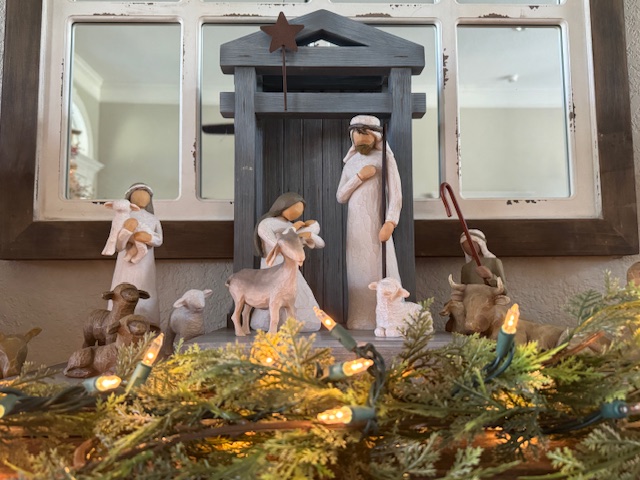
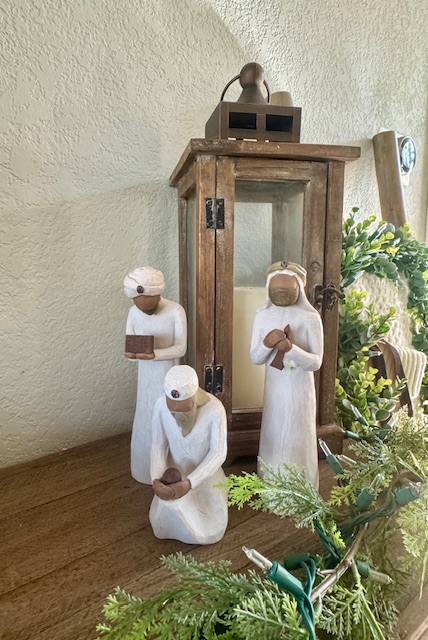
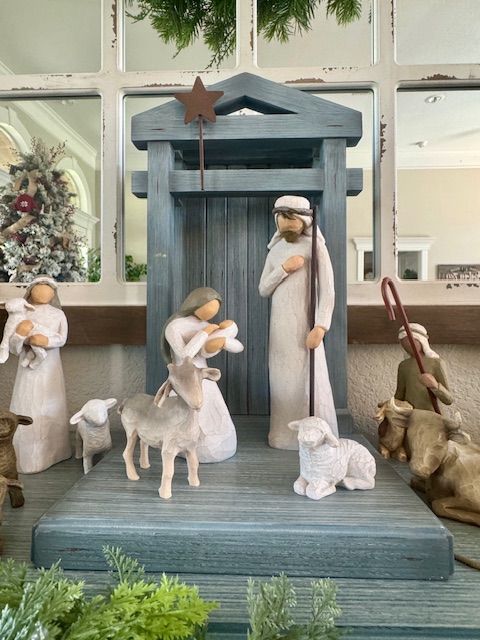
Every Christmas, I lovingly unpack my nativity set – the stable, Joseph and Mary with baby Jesus, shepherds with their sheep, and, of course, those three beautifully robed wise men, gifts in hand. For years, I arranged them all together, picturing that quiet, holy night when everyone gathered around the newborn Savior.
After all, I was born and raised Southern Baptist, and growing up, every Christmas pageant and every nativity scene on the church lawn had the wise men standing right next to Mary and Joseph. I never really questioned it – it just seemed right.
But during a Biblical history class in graduate school, I learned something that completely reshaped that familiar scene for me: the wise men weren’t actually present the night Jesus was born.
At first, that detail surprised me. But the longer I reflected on it, the more it reminded me that the Christmas story has always been about God drawing people to Himself—right on time, and never a moment too late.
Wait . . . Where Were They?
If you open the Gospel of Luke, you’ll find the familiar Christmas story: Mary and Joseph arriving in Bethlehem, no room in the inn, baby Jesus laid in a manger, and shepherds in the fields who hurried to see Him that very night.
But when you flip to Matthew’s Gospel, you’ll read about something that happened later – the visit of the magi (often called the “wise men”) from the East.
Matthew 2:1 tells us:
“After Jesus was born in Bethlehem of Judea in the days of Herod the king, wise men from the east came to Jerusalem.”
After He was born.
And when they finally arrived, they didn’t find a baby wrapped in swaddling clothes in a manger – they found a child living in a house (Matthew 2:11). Scholars believe that by the time the wise men reached Him, Jesus may have been two years old.
So those beautifully dressed travelers in our manger scenes? They actually missed the manger – but not the Messiah.
Why It Matters
This isn’t simply a bit of Bible trivia. It’s a reminder that God leads each heart in His perfect timing, and that the way people find their way to Jesus is beautifully varied. No one’s path is the same – and it was never meant to be.
The story of the shepherds and the wise men shows two beautiful paths of worship:
- The Shepherds represent the humble and the nearby – those who were close enough to hear the good news first and responded immediately.
- The Wise Men represent the seekers from afar – those who followed the light of a distant star, trusting prophecy and divine guidance, and found Him after a long, faithful journey.
Both groups came to worship the same Savior, but at different moments. And that’s the beauty of it – Jesus welcomes both the ones who run to Him right away and the ones who arrive later after a long road of seeking.
How God Guided the Magi – and How He Still Guides Us Today
The magi didn’t stumble into Bethlehem by accident. Their journey was long, unfamiliar, and full of unknowns – yet God guided them every step of the way.
He used what they already understood (a star) and connected it with what they were seeking (truth, prophecy, and the coming King). God’s guidance wasn’t loud or dramatic. It was steady. Persistent. Personal.
And He guides us the same way today:
Through His Word
The magi followed prophecy.
We follow Scripture – our steady, unchanging compass when life feels uncertain.
Through One Step of Obedience at a Time
The magi didn’t get the whole plan – only the next light to follow.
God guides us the same way: one faithful step, then another.
When the magi finally arrived, they found Jesus waiting – just as we find Him waiting when we trust His timing more than our own.
Giving the Wise Men Their Journey
So, do I toss the wise men back in the Christmas storage box and forget about them?
Absolutely not. I just give them their own journey to the Savior.
Each December, I set the wise men away from the rest of the nativity. Each week, they “travel” a little closer to the manger, finally arriving on Epiphany (January 6) – the day the church traditionally celebrates their visit.
It has become one of my favorite traditions – a gentle, visual reminder that the wise men followed God’s light step by step, just as we are called to do in our own lives.
The Heart of the Story
Leaving the wise men out of the nativity scene isn’t about being overly precise or “biblically correct.” It’s about honoring the story as God wrote it.
The shepherds saw a Savior in a manger – God made flesh, lowly and approachable.
The magi saw a King in a home – divine, worthy of gifts and worship.
Both moments reveal something sacred:
Jesus as Redeemer and Ruler.
Infant and Infinite.
Near and Majestic.
So go ahead – let the shepherds celebrate around the manger. And let the wise men take their time on the journey. Allow their slow and steady travel to remind you that seeking Jesus often happens one faithful step at a time.
Because whether you find Him at the manger or after a long road of searching – He’s always worth every mile of the journey.







Leave a Reply